 |
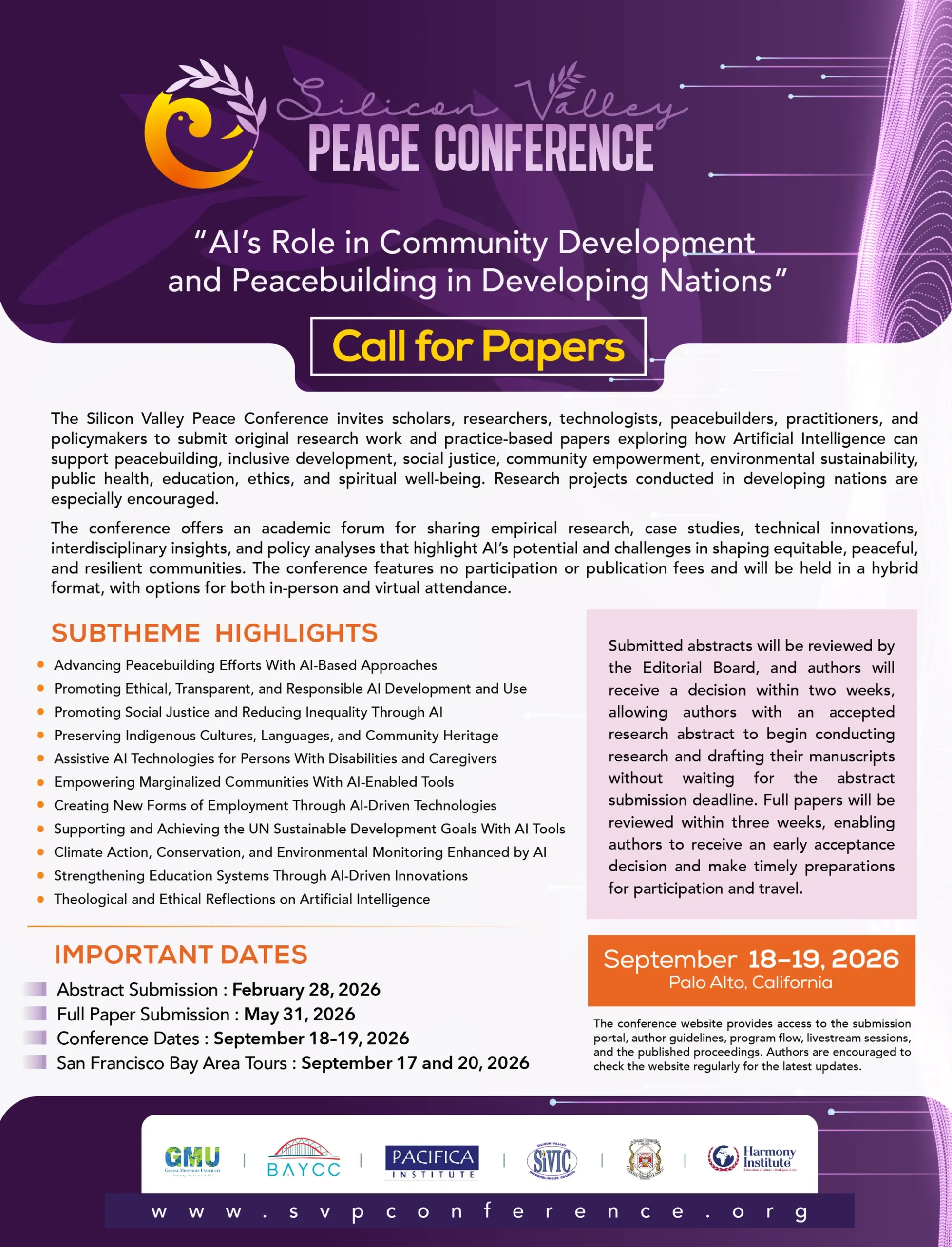
The Silicon Valley Peace Conference invites scholars, researchers, technologists, peacebuilders, practitioners, and policymakers to submit original research work and practice-based papers exploring how Artificial Intelligence can support peacebuilding, inclusive development, social justice, community empowerment, environmental sustainability, public health, education, ethics, and spiritual well-being. Research projects conducted in developing nations are especially encouraged.
The conference offers an academic forum for sharing empirical research, case studies, technical innovations, interdisciplinary insights, and policy analyses that highlight AI’s potential and challenges in shaping equitable, peaceful, and resilient communities. The conference features no participation or publication fees and will be held in a hybrid format, with options for both in-person and virtual attendance.
Submitted abstracts will be reviewed by the Editorial Board, and authors will receive a decision within two weeks, allowing authors with an accepted research abstract to begin conducting research and drafting their manuscripts without waiting for the abstract submission deadline. Full papers will be reviewed within three weeks, enabling authors to receive an early acceptance decision and make timely preparations for participation and travel.
Important Deadlines
Abstract Submission: February 28, 2026
Full Paper Submission: May 31, 2026
Conference Dates: September 18–19, 2026
San Francisco Bay Area Tours: September 17 and 20, 2026
Conference Website
The conference website offers comprehensive details, including expanded subthemes, submission procedures, publication guidelines, conference program flow, and other key materials for authors and participants: www.svpconference.org.
|